Recognizing What Has Always Been Here
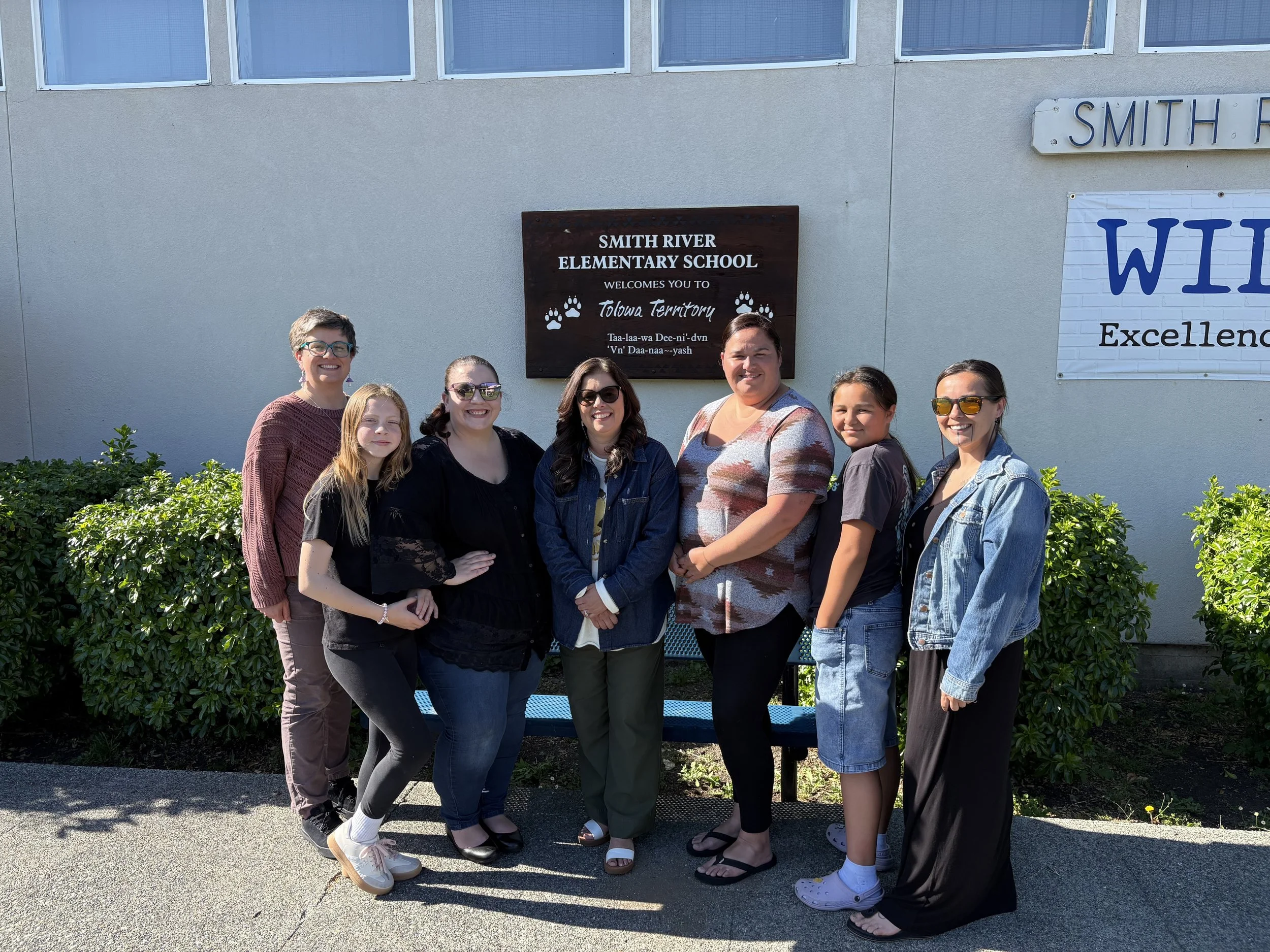
Pictured left to right: Amy Campbell-Blair (True North Director of Organizing), Melody Campbell (student and daughter of Sarah Campbell), Sarah Campbell (Smith River LOC Leader), Nichole Cochran (Smith River Principal), Amanda O'Connell (Smith River LOC Leader), Lola Lopez (student and daughter of Amanda O'Connell), Andromeda Lopez (True North Organizer). Not pictured: Lauryn Cortez (Smith River LOC Leader)
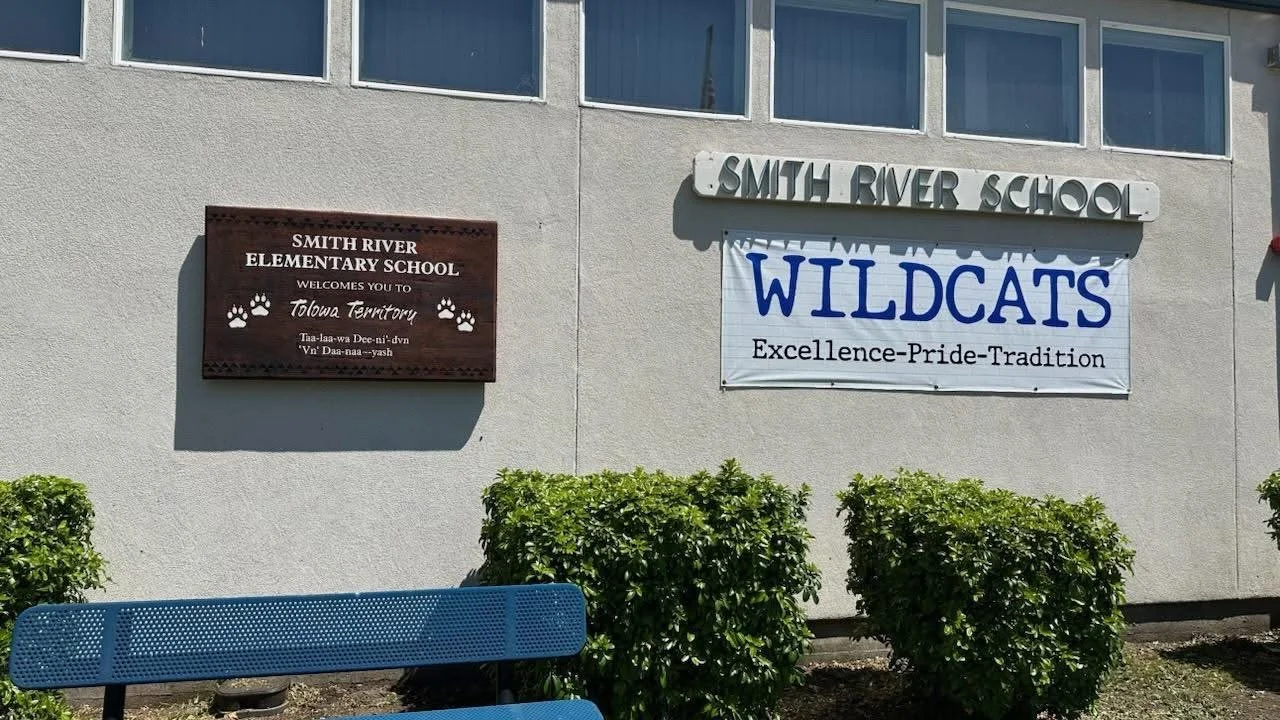
Visitors arriving at Smith River Elementary School will now see something new at the entrance: a Land Acknowledgment Sign recognizing that the school stands on Tolowa homelands.
The sign is simple. The journey to get there was not.
Following more than a year of community organizing, the Del Norte County Unified School District Board unanimously approved the installation of the sign, marking the first land acknowledgment sign adopted by a school site within DNUSD and the first time a K-12 school in the district has formally recognized that it stands on Tolowa homelands.
For many community members, this milestone represents far more than the installation of a sign.
For generations, Tolowa people have lived, cared for, and remained connected to this place. Yet that history has not always been visible in the public spaces where children learn and families gather. The installation of this sign offers a meaningful acknowledgment of the original people of this land and creates an opportunity for students, families, educators, and visitors to learn about the history that has always been here.
The effort was led by the Smith River Local Organizing Committee (LOC), a group of parents, Tribal citizens, educators, and community members who have spent the past year building relationships, identifying shared priorities, and working together to strengthen Smith River School.
Through conversations with families, school leadership, and the broader community, one idea continued to rise to the surface: creating a permanent acknowledgment of the original people of this land so future generations would see themselves, and their history, reflected in the place where they learn each day.
As the proposal moved through the district's approval process, community members engaged in thoughtful conversations about history, belonging, and what it means to be seen and acknowledged in the place you call home.
When the proposal came before the school board, elders, youth, families, Tribal citizens, educators, and allies filled the room. They shared personal testimony about why the project mattered—not only as a marker on campus, but as a reflection of identity, history, and hope for future generations.
There were moments of pain, honesty, and reflection. There was also strength, dignity, and deep love for community.
One of the most meaningful moments of the evening was witnessing Tolowa and Yurok community members standing together in support of one another. That solidarity reflected a shared commitment to honoring Indigenous histories, homelands, and communities across the region.
Following the testimony, the Board voted unanimously to approve the project. The sign now stands at Smith River School as a visible reminder that Tolowa people have always been here and continue to shape the life of this community.
This milestone reflects months of conversations, relationship-building, and community leadership. It also reflects the power of partnership. The work was made possible through the leadership of the Smith River LOC, the many community members who shared their experiences and carried the effort forward, and the unwavering support and collaboration of Principal Nicole Cochran, whose partnership throughout the process helped make this vision a reality.
While the installation of the sign marks an important milestone, it is not the end of the story. It is another step toward building schools where every student feels a sense of belonging, where Indigenous histories are recognized, and where relationships between schools and the communities they serve continue to grow.
More than a marker on campus, the sign stands as a reflection of what is possible when people come together, listen deeply, and work side-by-side to create change that will benefit future generations.